Medulloblastoma

What is it?

Medulloblastomas are the most common malignant brain tumor in kids and are extremely rare in adults, accounting for 1-2 percent of all cases of brain tumors in adults. In adults, most medulloblastomas occur in individuals between 20-44 years of age. Medulloblastomas are extremely rare in individuals over the age of 45.

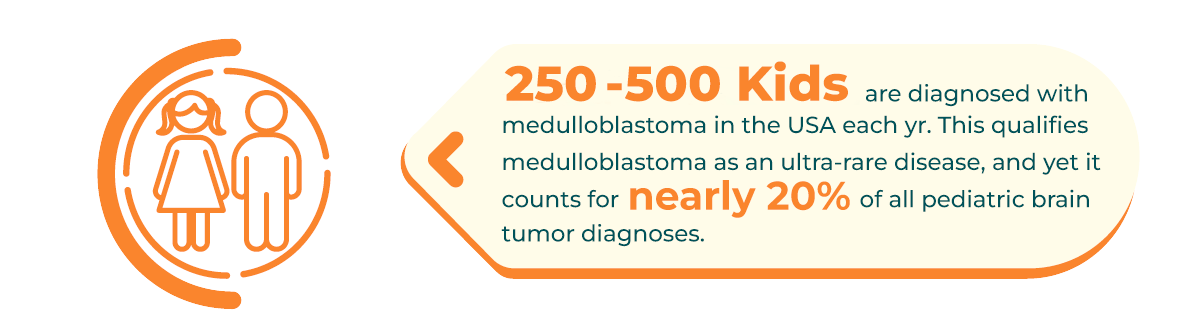
In kids, males are affected more often than females. The exact incidence of medulloblastomas is not known, and many different estimates are given in the medical literature. Generally, Medulloblastomas account for 2 percent of all primary brain tumors and 18 percent of all pediatric brain tumors. Approximately 1,000 new cases are diagnosed in kids and adults each year in the United States.

Incidence of Childhood Cancer

  • Each year around 15,780 kids are diagnosed with cancer in the US
  • One in every 285 Americans develops cancer before the age of twenty.
  • On the average, 36 kids and adolescents are diagnosed with cancer everyday in the United States (around 46 per school day).
  • On the average, one in every four elementary schools has a child with cancer. The average high school has two students who are current or former cancer patients.
  • The incidence of invasive pediatric cancers is up 29% in the past 20 years.
  • The causes of most childhood cancers are unknown. At present, childhood cancer cannot be prevented.
  • Childhood cancer occurs regularly, randomly and spares no ethnic group, socioeconomic class, or geographic region.
  • 35,000 kids are currently in treatment for cancer.

Mortality Associated with Childhood Cancer

  • Cancer is the leading cause of death by disease in kids under the age of 15 in the United States.
  • 1 in 5 kids diagnosed with cancer will die within 5-years
  • 1 in 3 kids diagnosed with cancer will not live-out a normal life-span (excess mortality)
  • Some pediatric brain tumors, such as brain stem gliomas and pontine gliomas, are terminal upon diagnosis and no new protocols have been developed in 30 years.
  • Many pediatric cancers, including neuroblastoma and disseminated medulloblastoma, are terminal upon progression or recurrence.
  • The average age of death for a child with cancer is 8, causing a child to lose 69 years of expected life.
  • More kids die of cancer every year than adults died in 9/11.
  • Childhood cancers affect more potential patient-years of life than any other cancer except breast and lung cancer.
  • Cancer kills more kids than AIDs, asthma, diabetes, cystic fibrosis and congenital anomalies combined.

Facts About Pediatric Cancer Survivors

  • 74% of childhood cancer survivors have chronic illnesses, and some 40% of childhood cancer survivors have severe illnesses or die from such illnesses.
  • Childhood cancer survivors are at significant risk for secondary cancers later in life.
  • Cancer treatments can affect a kid’s growth, fertility, and endocrine system. Child survivors may be permanently immunologically suppressed.
  • Radiation to a kid’s brain can significantly damage cognitive function, or if radiation is given at a very young age, limiting the ability to read, do basic math, tell time or even talk.
  • Physical and neurocognitive disabilities resulting from treatment may prevent childhood cancer survivors from fully participating in school, social activities and eventually work, which can cause depression and feelings of isolation.
  • Childhood cancer survivors have difficulty getting married and obtaining jobs, health and life insurance.

The Disease We Fight

Medulloblastoma is a primary central nervous system (CNS) tumor. This means it begins in the brain or spinal cord. To get an accurate diagnosis, a piece of tumor tissue will be removed during surgery, if possible. Medulloblastoma begins in different cells in the cerebellum, which is the back of the brain. The cerebellum controls body movement and coordination.

Medulloblastoma occurs most commonly in kids. Medulloblastoma is more common in boys than in girls and occurs most often in the first 8 years of life, with about half of cases occurring in kids younger than 6 years old.

Most brain and spinal cord tumors occur randomly and have no apperant cause. Genetic factors & environmental factors may play a part. Certain gene and chromosome changes within the tumor cell are associated with the development of Medulloblastoma. Usually, it is not known why these genetic changes occur.

To get more information on medulloblastoma, resources, and research, click here.